
This week, the Bank of Canada (BoC) held its key interest rate steady at 2.75%. That’s the headline. But if you stop there, you’ll miss the bigger story — one that affects not only your mortgage rate, but also the future of housing affordability and the broader economy.
Let’s break it all down in plain language.
1. Seven Rate Cuts Since 2024 — But That Trend May Be Over
Between April 2024 and today, the Bank of Canada cut interest rates seven times, dropping the policy rate from 5.00% to 2.75%. These cuts made borrowing cheaper — especially for those on variable-rate mortgages — and helped reduce some pressure in the housing market.
But this week’s pause might be the end of the line for rate cuts, at least for the foreseeable future.
2. Housing Was Barely Mentioned — That’s Not a Good Sign
In the past 24 Monetary Policy Reports from the Bank of Canada, housing was mentioned an average of 13 times. In this week’s report? Just twice.
It’s not because the housing crisis is over. Far from it. It’s because the BoC now sees a potential global tariff war as a much larger threat to the Canadian economy — one that takes priority over affordability concerns.
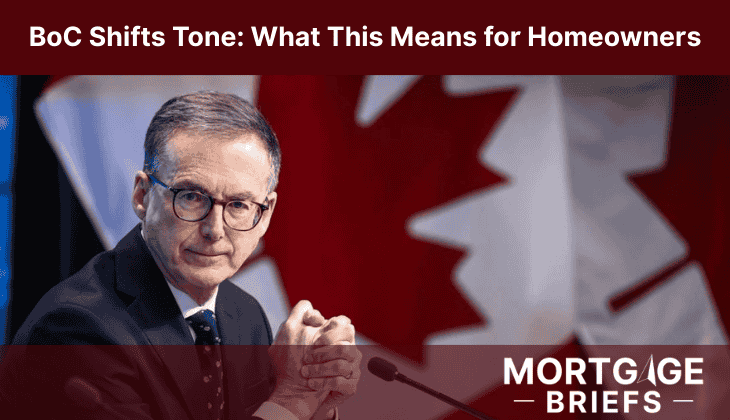
Tiff Macklem
-Governor-
- Bank of Canada-
A new crisis is on the horizon. If US tariffs play out as threatened, the economic impact would be severe.
3. A Tariff War Could Hit Canada Where It Hurts
A prolonged tariff dispute could have serious consequences here at home, especially for key sectors like:
Automobiles
Steel
Lumber
Exporters (including agriculture, manufacturing, and more)
Trucking and transportation
If those sectors slow down, jobs are affected — and so is overall economic growth. And if tariffs make everyday goods more expensive at the same time, inflation could pick back up. That’s a dangerous mix.
4. Stagflation: The Word No One Wants to Hear
The Bank of Canada mentioned stagflation as a risk — and that’s not something we hear often.
Tiff Macklem
-Governor-
-Bank of Canada-
What is stagflation?
It’s when inflation stays high while the economy slows down or even shrinks.
Normally, when the economy weakens, inflation drops — and the central bank cuts rates to help stimulate spending.
But with stagflation:
Cutting rates could make inflation worse.
Raising rates could hurt an already fragile economy.
It’s a lose-lose situation. And if trade tensions continue, it’s a scenario we might have to take seriously.
5. Affordability Is Still a Struggle — Especially for Buyers
Housing affordability has been a major challenge in Canada for several years now. And while interest rates have come down significantly over the last year, home prices haven’t followed suit in a meaningful way.
In some markets, home prices have ticked slightly lower.
In others — especially the condo market — prices have taken a hit.
But overall, affordability is still out of reach for many buyers.
With wage growth also slowing down, the gap between what people earn and what homes cost is growing wider — not smaller. And if interest rates stop falling, or worse, start rising again, affordability will only get tougher.
A Visual Snapshot: Why Affordability Feels Worse
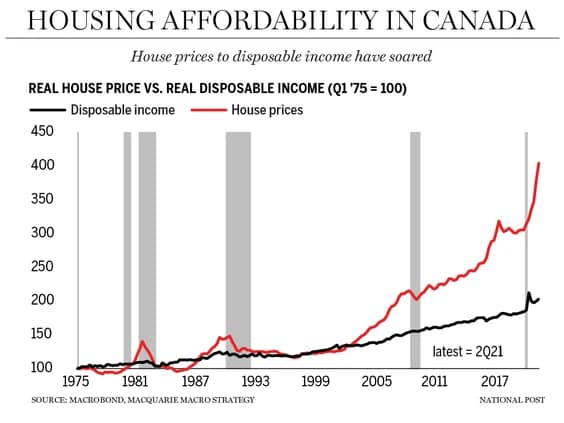
This chart highlights how real house prices have far outpaced real disposable income in Canada since the mid-1970s — helping explain why so many Canadians feel like ownership is slipping further away.
6. Uncertainty Is the Message — And That Affects Everyone
The word “uncertainty” came up repeatedly during the Bank of Canada’s press conference this week. That’s not just political talk — it reflects the real challenge of making policy (and financial decisions) when the road ahead isn’t clear.
From inflation and trade wars to wages and housing — there are a lot of unknowns right now. And those unknowns are starting to weigh on everyday Canadians.
What This Means for Homeowners and Buyers
If you’ve been waiting to buy a home, renew your mortgage, or refinance, this pause may feel like a "calm" moment — but the outlook is still very fluid.
- Fixed rates have already started creeping back up.
- Variable rates remain tied to the BoC’s decisions — and if inflation returns, cuts may not be on the table.
- Affordability is still a concern, and further delays could mean missing windows of opportunity.
Everyone’s situation is different — but if you’re unsure whether to wait, lock in, or make a move, it’s worth having that conversation now, not later.